RV Repair and Diagnostics
Service can involve electrical, plumbing, appliances, roof and seals, air conditioning, generator, slides, awnings and other coach systems. Diagnosis should identify the cause before parts are replaced.

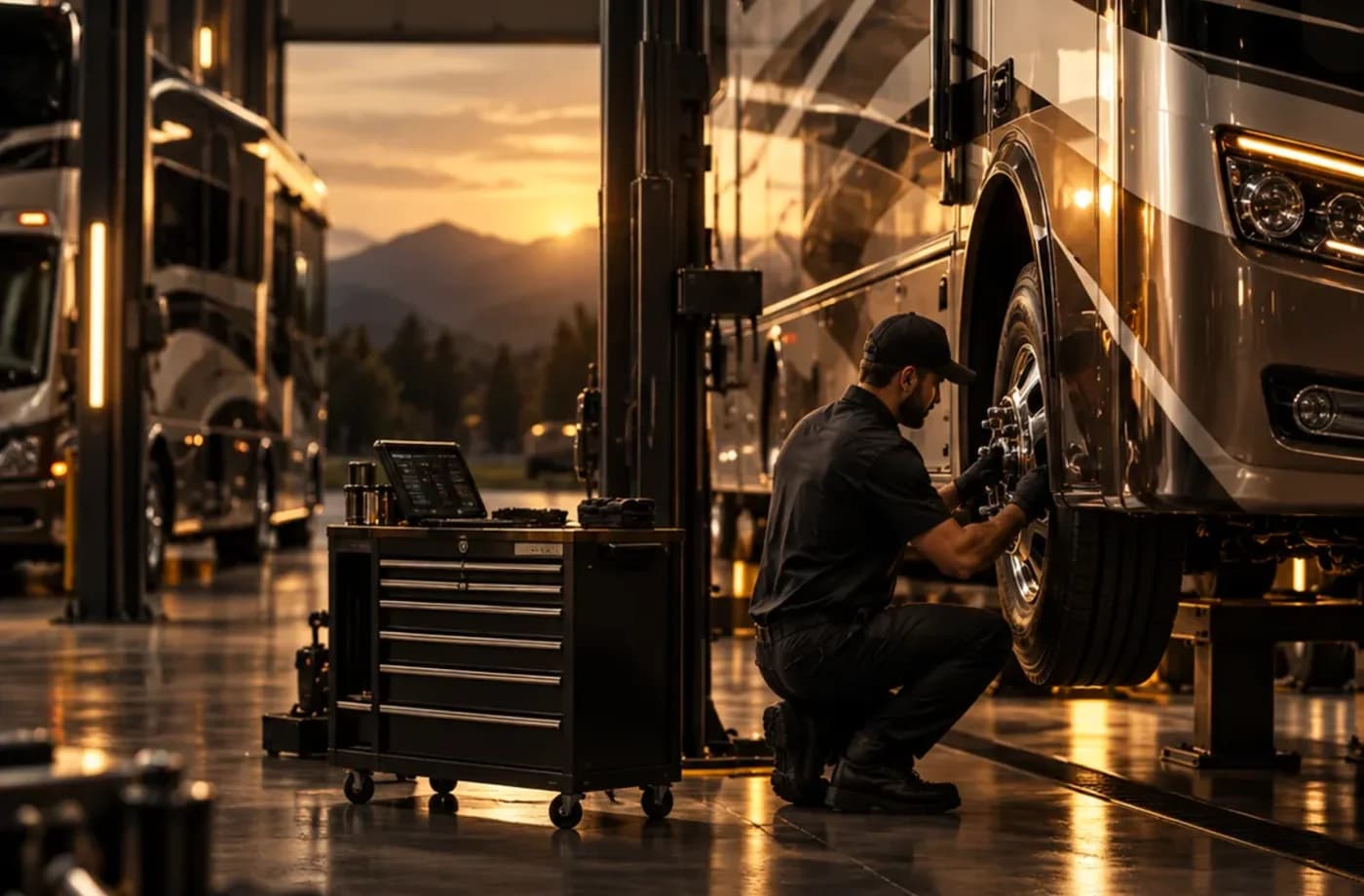
Protect reliability and comfort with preventive inspections, maintenance coordination and practical ownership support.
RV service starts with accurate symptoms and vehicle information. Provide year, make, model, VIN, affected system and recent work, then confirm the appointment and service scope before bringing the RV.
Service needs vary by RV and system. Tell us about the vehicle and concern, and we will confirm whether the work can be handled directly or guide you to the right specialist.

Start with the decision points that matter most, then use the detailed sections below for deeper research.
Service can involve electrical, plumbing, appliances, roof and seals, air conditioning, generator, slides, awnings and other coach systems. Diagnosis should identify the cause before parts are replaced.
Preventive checks can catch roof seal deterioration, tire aging, battery problems, leaks and loose connections before a trip. Follow the RV and component manufacturer schedules.
Motorhomes combine coach systems with a motorized chassis. Confirm whether a concern belongs to the living-area systems or requires chassis and drivetrain service.



Towables add running gear, brakes, hitches and weight-distribution considerations to the coach systems shared with motorhomes.
A systematic inspection can help before purchase, sale or a long trip. It documents observed condition but does not guarantee future performance.
Allow time for diagnosis, parts and follow-up before departure instead of scheduling critical service immediately before travel.
Good RV service starts with a clear description of what the vehicle is doing, when it happens and what changed before the problem appeared. For RV Service Center in Davis, California, note whether the issue occurs on shore power, battery power, generator power, city water, pump water, propane or only while driving. Record warning lights, unusual sounds, odors, leaks, error codes and the exact sequence that causes the fault. Include the RV year, make, model, VIN and chassis information when relevant. A detailed symptom history can help a technician test the correct system instead of replacing parts by guesswork. If the issue is intermittent, photos or video may be useful when the service process supports them.
Water can enter around roof seams, vents, skylights, windows, doors, marker lights and other openings, and damage may spread before it becomes obvious inside. Inspect sealants and roof surfaces on a schedule appropriate to the RV and the products used. Look for cracking, lifting, gaps, staining, soft materials, bubbling wall surfaces or musty odors. Do not assume every sealant is compatible with every roof membrane or sidewall material. If active leakage is suspected, protect the RV from further exposure and document the area before repairs. Water-damage diagnosis may require checking beyond the visible stain because moisture can travel inside walls, ceilings or floors.
An RV can contain 120-volt AC circuits, 12-volt DC circuits, converters, inverters, batteries, solar equipment, generators and chassis charging systems. A device that does not work may be affected by a fuse, breaker, connection, battery state, transfer switch, converter or control board rather than the device itself. Before service, note which power source is active and which other systems work normally. Battery age, chemistry, charging voltage and storage habits matter. Because electrical work can involve shock, fire and battery hazards, repairs should be performed only by people qualified for the system being tested. The page can help owners organize symptoms, but it is not a substitute for safe diagnostic procedures.
Low water flow, pump cycling, leaks, poor cooling, furnace faults and appliance problems can be affected by supply conditions as well as the component itself. For plumbing, check whether the issue appears on city water, the onboard pump or both, and note visible leaks or tank readings. For air conditioning, record outside temperature, power source and whether airflow or compressor operation changes. For refrigerators, water heaters and furnaces, note which energy source is selected and any error code. Avoid repeatedly resetting a system that trips a breaker, blows a fuse, smells hot or leaks fuel or water. Those symptoms call for proper diagnosis rather than repeated operation.
Create a maintenance log for the RV and record roof inspections, seal work, tire date codes and pressures, battery service, generator exercise, chassis maintenance, bearing or brake work on towables, appliance service and seasonal preparation. Before a long trip, test systems early enough that repairs can be scheduled without disrupting departure. Inspect safety alarms and fire extinguishers according to their instructions, and replace expired equipment. After a period of storage, check for pests, leaks, battery condition and tire pressure before driving. A documented maintenance history also helps a future buyer or technician understand what has already been done.
A useful request for RV Service Center in Davis, California should identify the RV, the affected system, the symptoms, when the problem started, recent work, any error codes and whether the vehicle is safe to move. Include the year, make, model and VIN, plus chassis or appliance model information if the issue is specific to those components. Ask what diagnostic fees apply, what work the shop can perform, whether authorization is required before additional labor, and how parts availability affects timing. If the concern may involve structural damage, water intrusion, propane, brakes or other safety-critical systems, state that clearly. Confirm the final service scope and appointment before traveling from your area.
Include the RV, rental, financing, selling, trade-in or service details that will help us understand your request.

Use the service directory for roof, AC, electrical, plumbing, appliances, generator, slides, awnings, inspections and maintenance, then confirm the exact scope.
Timing depends on diagnosis, parts and technician availability. Ask for an estimate after evaluation.
If continued use could create a safety risk or further damage, stop using it and follow manufacturer guidance until evaluated.
Bring RV details, service history, manuals when available and notes or photos showing the symptom.
Yes. Schedule early enough to allow any needed repairs before departure.
Provide year, make, model, VIN, the affected system, symptoms, error codes, when the problem occurs and any recent repairs.
No. A symptom description helps route the concern, but many problems require testing of the actual RV and system.
Sealants can age, crack or separate around roof openings, allowing moisture to enter before interior damage is obvious.